When failure ≠ an option

Weak points in the logic for a campaign, strategy, crisis response, or policy can be found alone. They can be found with your AI Copilot, or as a team initiative. But where the Gen AI won't help, is when it's time to put your neck on the line, when you need to be sure there's no hallucinations, errors, or inaccuracies. That's when you need a human partner, a thinking partner, with a systematic approach.

arrow down red

The real problem:

CCOs need to constantly adapt, despite volatility. They know what they want like risk mitigation or certainty, but—bias, assumptions, & misconceptions silently impact decision quality and judgement.

Advising CEO, CFO & ELT on business strategy, evidence-based investment foresight, attribution & effectiveness—all requires specialized skills the comms team aren't experts in—and that LLMs can't be trusted with.

Request a call
Where art & science meet

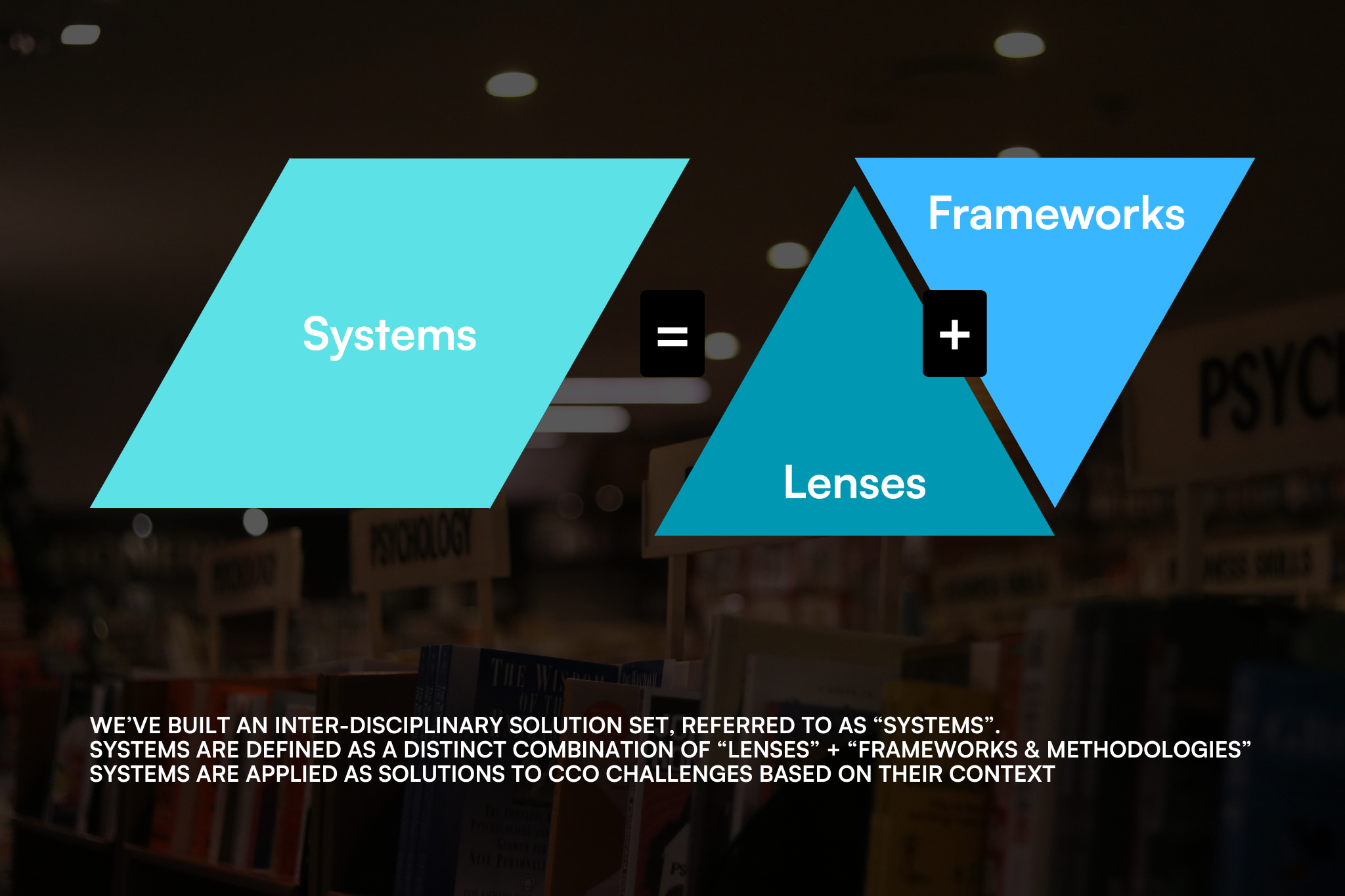
CCOs bring the art of communications, years of experience, and the people-skills that make them leaders. We bring the science. The final layer of our thinking systems are: Inter-disciplinary frameworks, methodologies, tools, and advanced assessment techniques—designed to bring an intellectual rigor to CCOs, so when they make high-stakes decisions outside the traditional art of communications—they come with receipts, proof of due diligence, and logic that withstands scrutiny under pressure. Now, it may sound complex because it's unfamiliar, but rest assured that it's our job to discern which are the most effective to use, for each given context & scenario.
→ Request a pre-workshop scoping call

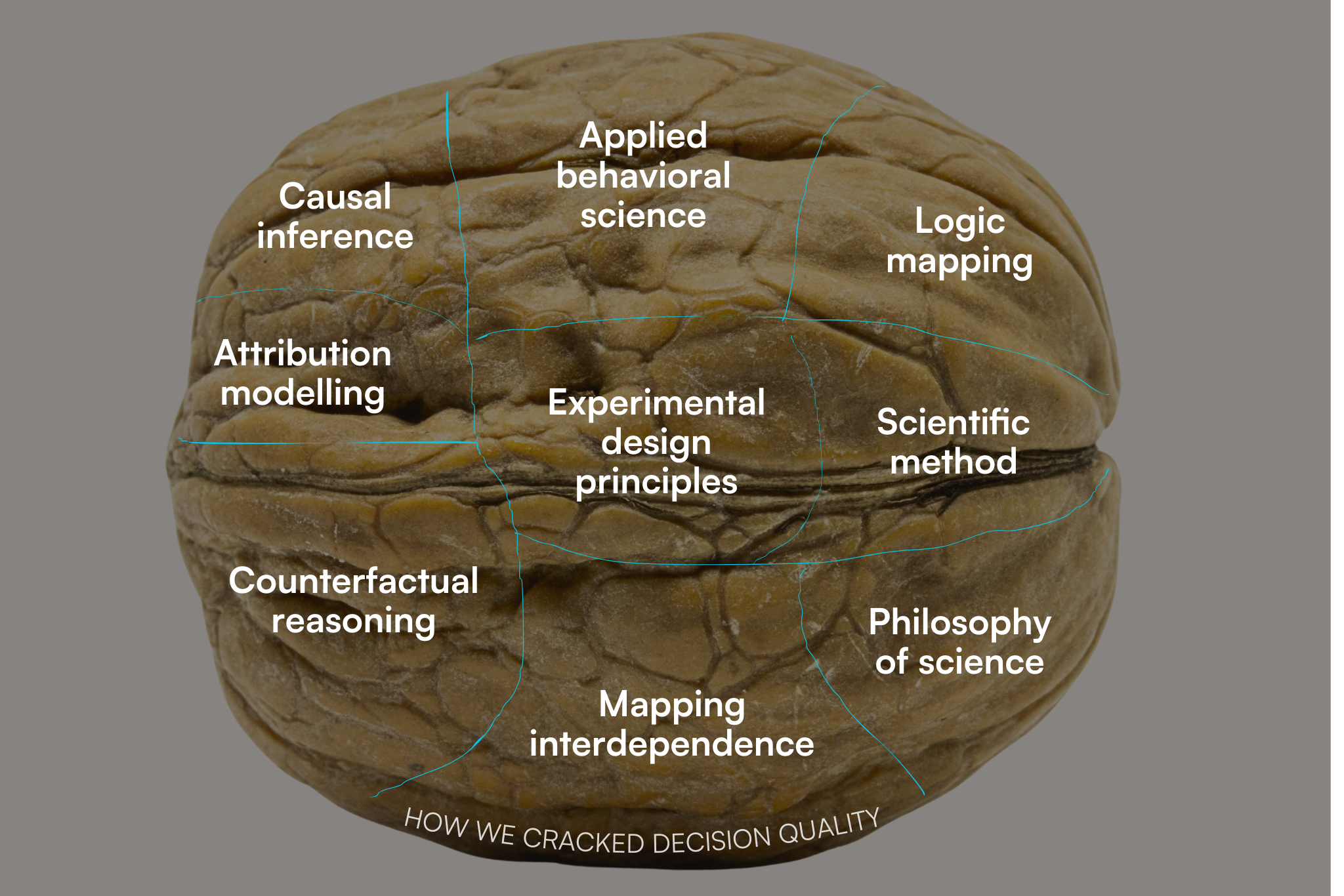
image of a walnut that has multiple science, math & philosophical areas of specialized knowledge on them with the label "how to crack decision quality"
Vintage image of librarians and researchers using headlamps to read and find material. One woman is showing another whos carrying a tray of documents. Images titled new frameworks, new methodologies & the old way of doing things
Sphere
HOW WE RUN WORKSHOPS

Everything you need to know

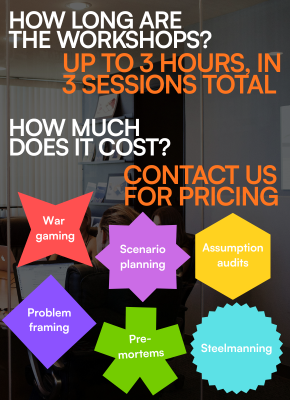
Think of a workshop like structured time with someone objective, who applies systematic lenses to your actual decision, so you can arrive at a recommendation you're confident defending. For those who prefer tackling this alone, we can run it 1:1, while for others—a team of 2-3 participants works well. Workshops can last up to three hours, and can include short follow up calls if required. Each is totally unique to your context, and centered around a specific decision ie: an activity, input, objective, goal, outcome, initiative, strategy, or report etc. Getting started has three steps:
Scoping & discovery: We connect to learn your story, situation & context before sharing a proposal for the ideal workshop—needs CCOs approval. This process is collaborative, and once concluded, guides the remainder of the engagement.
Pre-seeding ideas: Once context is clarified, participants must familiarize themselves with easy to digest subject matter—ideas to shift paradigms, and practice for using a lens, or framework to think through.
The workshop session: With a mission, and a goal-oriented approach, we conduct the workshop either remotely, or in person. Prioritizing healthy ideas exchanges—and wellness of mind & body.
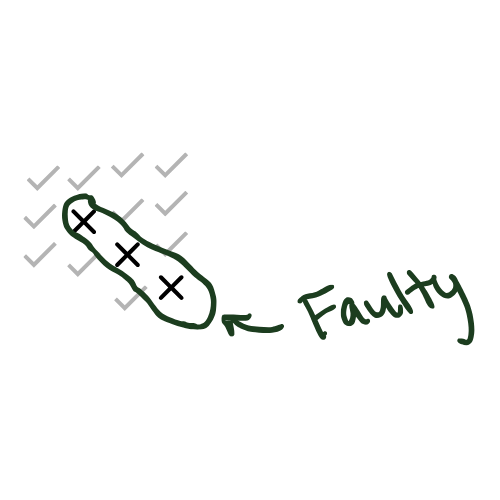
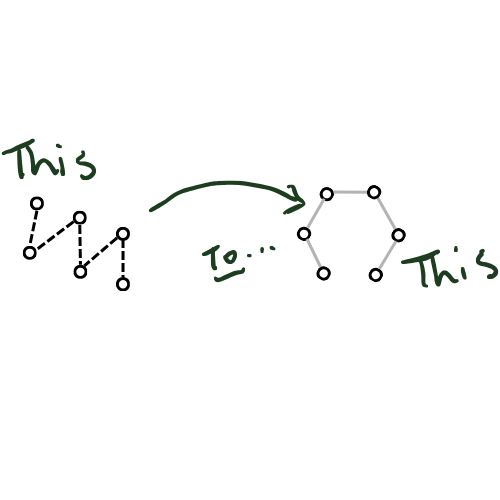
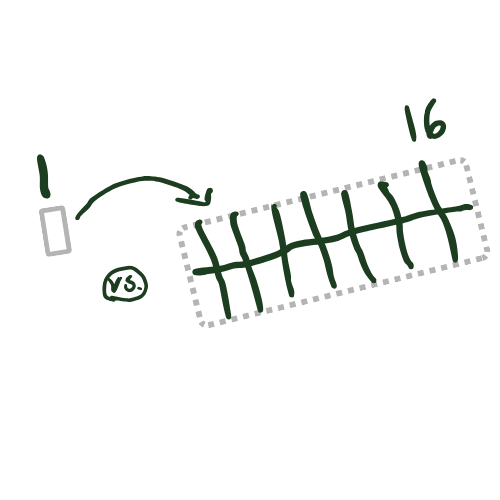
Faulty doodleBehavioral change doodlev2 capacity doodle
Rinse & repeat: Workshops are a routine thinking exercise for important decisions. We encourage a quarterly cadence in the first year. There's no rule for when to begin pre-seeding your team, but it must conclude prior to the session. Start today for free, with more pre-seeding artifacts on our Resources page. For best results, participants need a growth-mindset.

Discover Artifacts ↗

opt5
Torus
MEET YOUR FACILITATOR

Elevating your decision together

5stephorizontal
1. Validate & Align
Comparing the problem, goals, and answering questions nobody's asked yet. Aligning thinking & framing.
2. Models Applied
Based on context, models are applied and worked-through as a collective. Consolidated & presented.
3. Logic Under Pressure
Advanced assessment techniques, reasoning & critical thinking shapes insights & contrarian stats.
4. Trade-Offs Weighted
Prioritizing effort, risk & impact via Voting, rating, delegating & gauging confidence in solutions.
5. Shield & Sword
Applying systems thinking to  inform CCO strategies. Supporting defense, attack, or both.
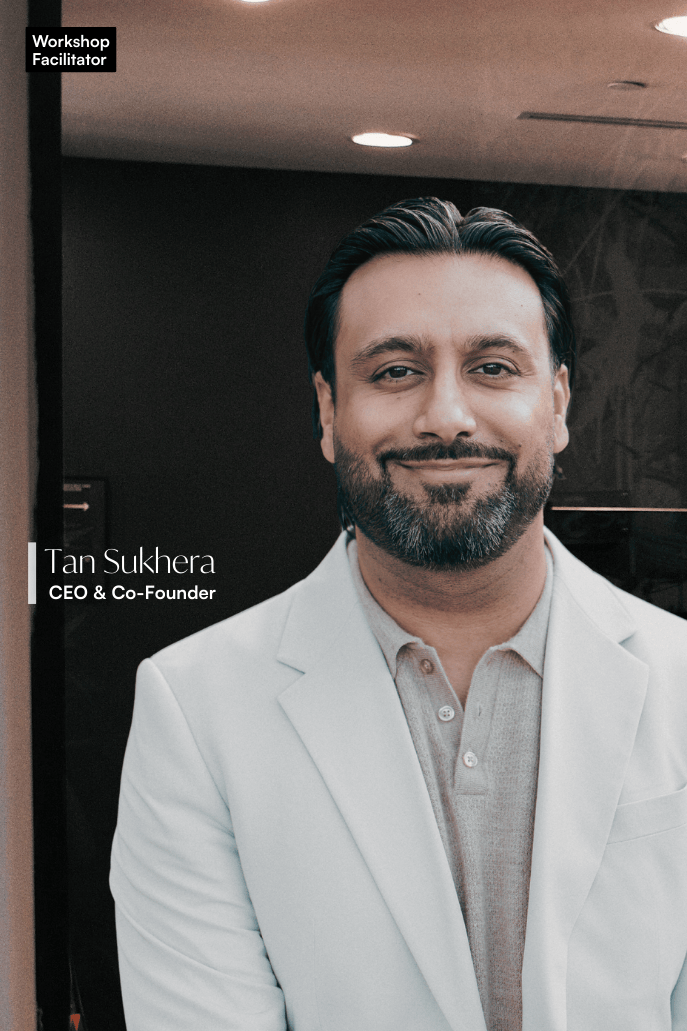
Tan Sukhera has a background in measurement & evaluation of communications. Worked with CCOs at F2000 orgs, across all industries & sectors. For over a decade, he's been trusted by C-suites to support & elevate teams with strategy & execution.
image of Piar's CEO & Co-Founder, Tan Sukhera with the words "workshop facilitator" on it
shawn-day

What if you were to find

flaws in your reporting?

Imagine this—you've been shown reporting that suggests that brand awareness, sales, headcount & leads all spike at the same time that your brilliant communications strategy launched. The night before you're set to present to fellow C-suite leaders, you come across a statement that makes you ponder: "Correlation does not equal causation".

That night, you don't sleep much, asking yourself: "Is the time-lag between my earned coverage spiking, and the business performance too tight? Though my team clearly means well, are they not dependable to give me the harsh truth? They can make me a great report, but will I be walking into a hornets nest with my CFO & CEO if I were to present something factually incorrect?—Ask yourself how you'd handle this? And if a healthy sense of professional humility & skepticism would help?

Circle (1)

Comms challenges that blindside teams

Influence Shifts:

Power often changes without warning

Power can move quickly and quietly. Probe beneath the surface to spot new influencers and changing dynamics before they catch you off guard.

Probe

Information Lag:

Decisions needed faster than evidence allows

You can’t always wait for perfect data. Revisit your decisions as fresh facts appear, and keep your strategy nimble when new evidence arrives.

Revisit

Attribution Confusion:

Success and failure get assigned randomly

Outcomes can fool even experienced teams. Reflect on what truly caused a result so you double down on what works and avoid chasing false lesson

Reflect

Context Drift:

What worked last quarter stops working

Patterns shift fast - what worked last quarter might stall today. Test familiar approaches against new realities to keep your strategy sharp and effective.

Test

Vector left
Vector left
chess

The top four laws of business physics

🪄 Counter evidence:
Information that would change confidence if seen. It blindsides your team. Whether it works for, or against your mission - this is a reality that should be prepared for.
🕓 Timing effects:
Early signals exist but teams miss them. Activities that build up the organization's awareness, confidence and trust often take time to reach impact.
🌪️ External forces:
Conditions that override internal logic. Market headwinds & tailwinds, consumer behavior, even your brand perception is an external force.
⚖️ Influence reality:
Who decides when formal authority fails? The heuristics, operating procedures, and systems your team builds - are invariably tested when things get real.
These realities shape crisis timing, stakeholder priorities & trust levels in the boardroom. Most teams never examine the thinking behind choices, because of the status-quo. Yet the teams that thrive, question shortcuts before stakes get high. CCOs who can accurately predict future events, place bets, and design strategies accordingly—need to know them.

Speak with us today

arrow down red

Survival of the fittest CCOs

Let's not sugar coat it, the once clear, crystal ball—is getting murkier. With the importance of communications well understood by C-suites worldwide, combined with the rate of of GenAI advancement— it's not a question of whether or not AI can become a comms expert with a business intelligence-edge. But rather—will the communications leadership be taken up by someone else? Will the job function of a CCO become line items on the "jobs to be done" list of a CMO? A CEO? One thing for sure is that in a world where execution is handled by machines—the only uniquely human skills remaining are high-quality decision making, and superior judgement.

Currently, there are little to no resources which would assist a CCO with this challenge. Could you imagine if the team member you trust most, let's say she's an SVP—suddenly developed systems, lenses, and matched those to frameworks you could utilize to navigate high-stakes decisions? You'd be succession planning with her in mind. So why isn't this a reality? Our founder has a quote that sums this up: "In order for anyone to take up the unique positioning we've developed for Piar, they would need to have an unfathomable degree of certainty. They would have had to work with the top CCOs, come from a measurement world, and have done multiple years of research to crack the problem—and be spending over six figures in it's pursuit. That's why we're the thinking partner of choice for the world's top CCOs, because we earned our place at the table".

MBG

We guarantee our workshops deliver value. If you’re not satisfied, we make it right - no questions asked.

robot